
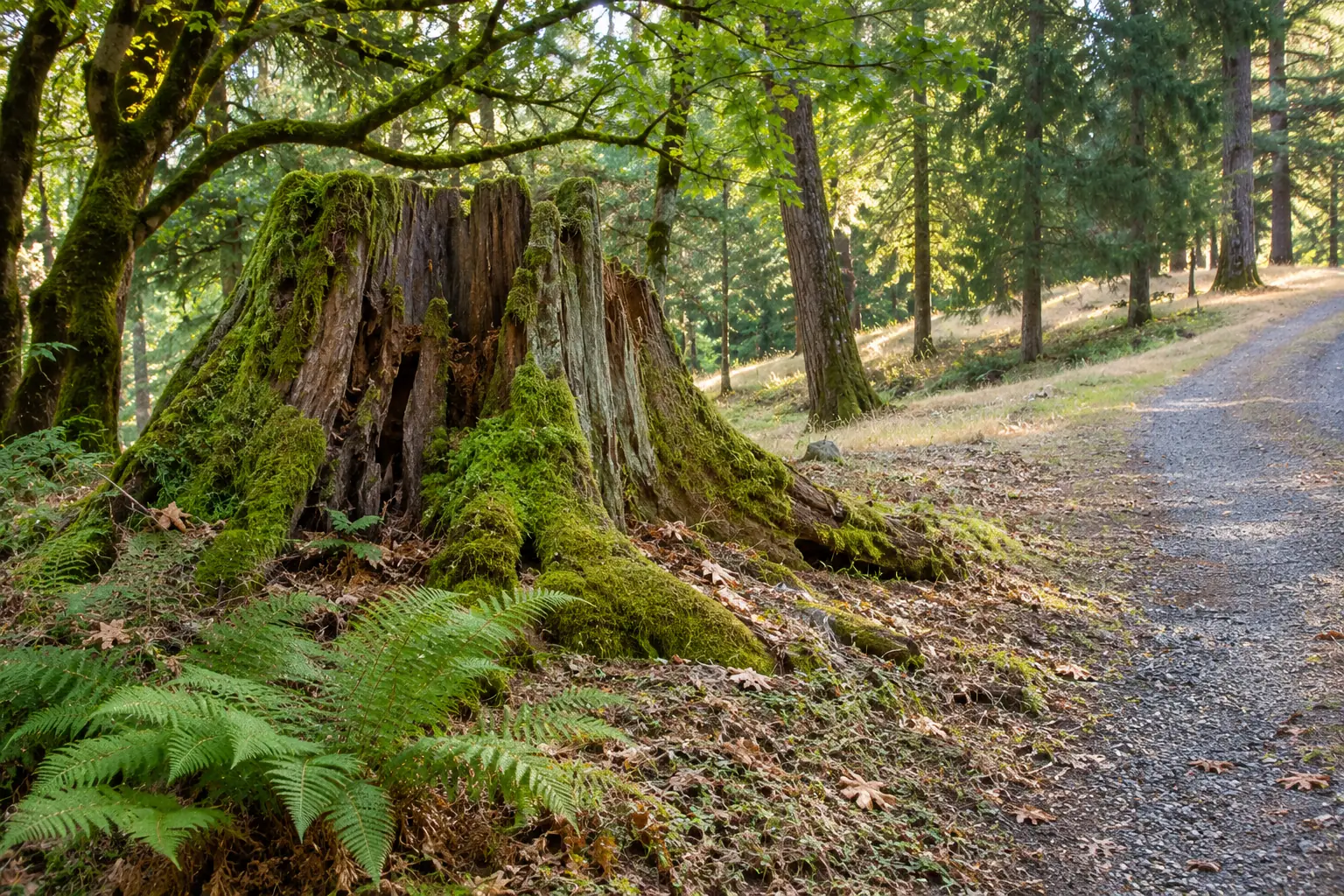
Stump grinding in Rogue River turns a leftover stump into wood chips a few inches below the soil, so the spot can be mowed, planted or built on. Call (541) 507-9640 to reach a tree service. This Rogue River number rings one outside contractor with a current Oregon CCB license. Have it see the stumps, check what is buried nearby and write the price down. Stump estimates are usually free, and the contractor can confirm that when you call.
What stump grinding does
A stump grinder is a machine with a spinning cutting wheel that chews the stump down into chips. The operator works the wheel back and forth across the stump until it sits below the surface. Most of the root system stays in the ground and rots over time.
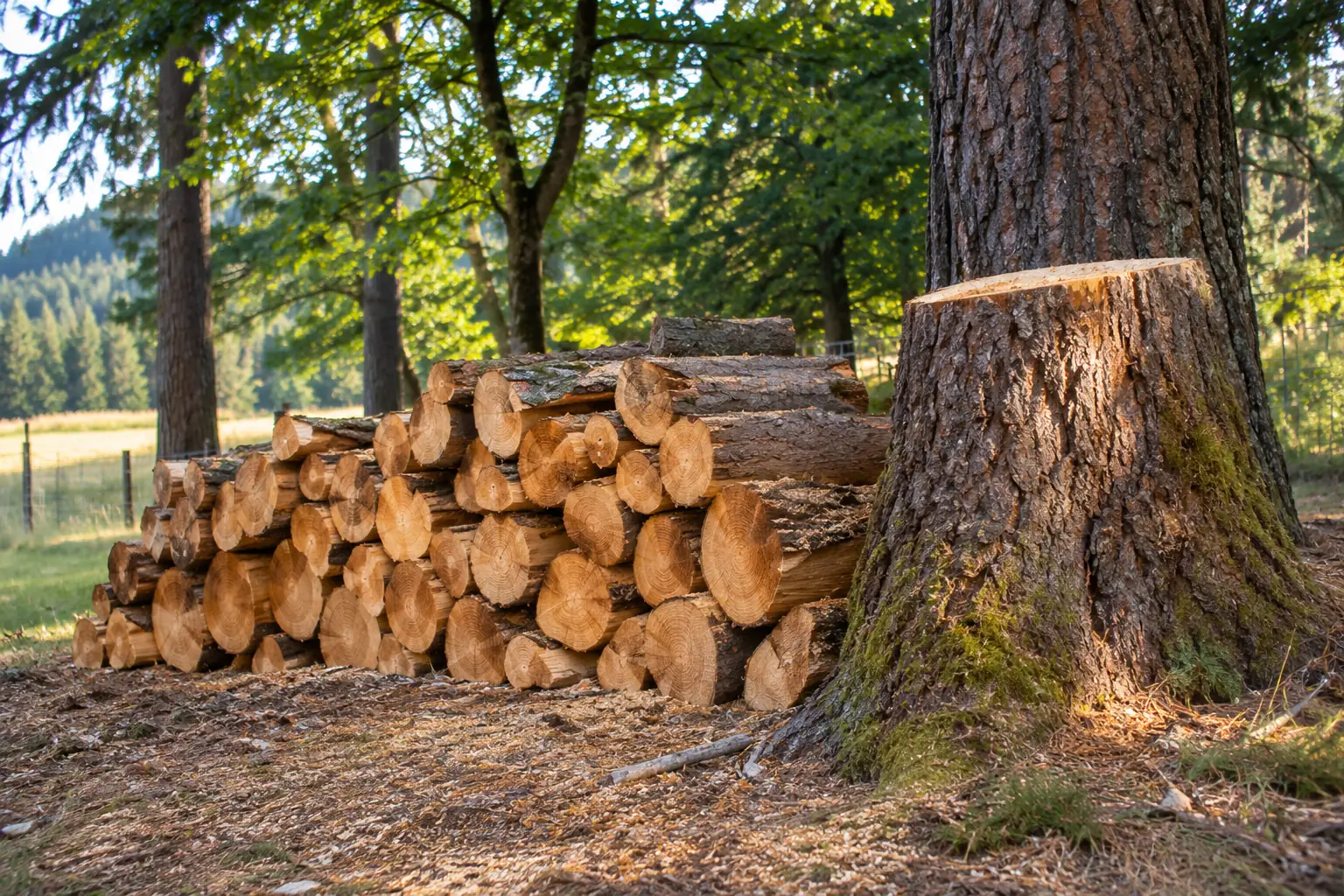
What you are left with:
- A shallow hole filled with a mix of chips and soil.
- A pile of chips, often larger than people expect.
- Roots running out from the old stump, below the surface.
Ask the company how deep it grinds as standard and what it charges to go deeper. A spot that will be lawn needs less depth than a spot where you plan to set a shed or pour a slab.
Grinding compared with full removal
Grinding and full stump removal solve different problems. Grinding is the usual choice when you want the stump gone from sight and the ground usable again. Full removal digs out the stump and the main roots, which leaves a large hole and disturbs much more soil.
Full removal can make sense when the spot will hold a foundation, a pool or a driveway, or when roots are lifting pavement. It rarely makes sense next to a creek, a septic field or a well, where disturbing the soil causes its own trouble. The tree removal cost guide lists published price ranges for both.
Buried lines and Oregon 811
Before any grinding, find out what is buried near the stump. Water lines from a well, power lines to an outbuilding, irrigation pipe and phone or cable lines often run through yards on rural lots.
Oregon's Utility Notification Center takes locate requests at 811. Its FAQ says anyone doing excavation must call for locates, with a narrow homeowner exemption that includes digging less than 12 inches deep, and that requests go in at least two full business days and no more than 10 business days ahead. The FAQ notes that cutting and dragging trees with heavy equipment can damage buried facilities, and that most operators locate only up to your meter or private service connection point at no charge. Lines past that point, such as a buried line from your well to the house or power to a shop, are yours to point out, or to have a private locator find.
Ask the company you are connected with whether it will request the locate or expects you to. Get the answer in writing on the estimate.
Stumps near the septic system and the well
A stump in or beside a septic drainfield needs a careful plan. OSU Extension's Why do septic systems fail? notes that tree roots can clog the soil absorption field and that driving, parking or building on top of the field can damage it. A heavy grinder rolling across the field to reach a stump can do exactly that.
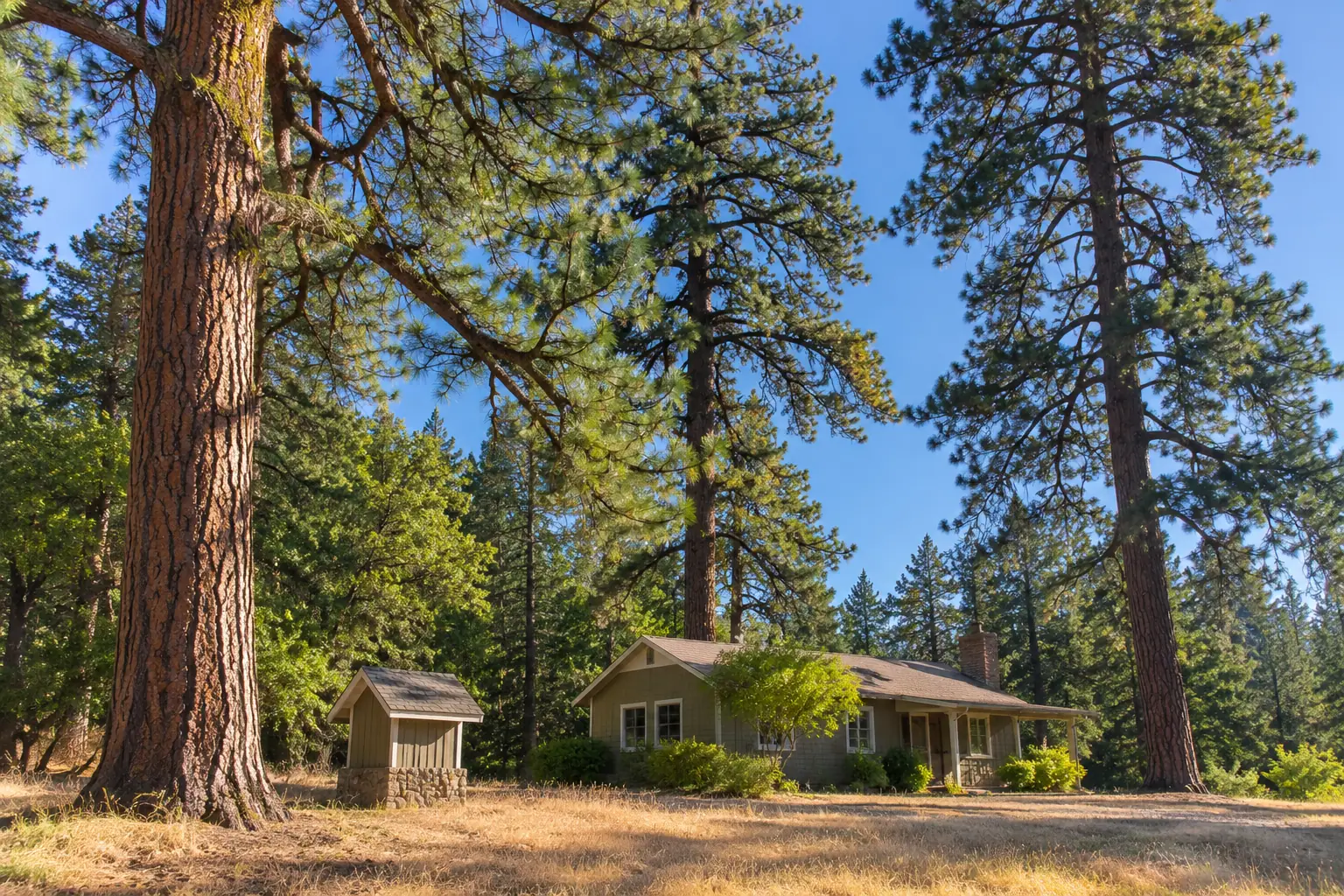
Before the grinding visit:
- Mark the septic tank, its lid and the edges of the drainfield.
- Mark the wellhead and any buried water lines.
- Tell the company which way it can approach the stump without crossing the field.
- Ask whether a smaller, lighter grinder can reach stumps in tight spots.
Some stumps sit too close to a pipe or tank to grind safely. In that case, the company may suggest cutting the stump flush and leaving it to rot.
Stumps on creek and river banks
Think twice before grinding a stump near the Rogue River, Evans Creek or Wards Creek. The roots of an old stump often help hold the bank together for years after the tree is gone, and grinding loosens the soil right at the edge.
The rules also apply. The Jackson Soil and Water Conservation District's guide to the City of Rogue River riparian rules gives the protected area as 75 feet from the top of the bank on the Rogue River and 50 feet on streams such as Evans Creek and Wards Creek, says clearing in those areas needs city approval, and says erosion control is required with any removal. The district's county guide applies the same setbacks outside city limits and lists placing soil, gravel or fill near streams among the things that need prior approval.
Call the city or Jackson County before grinding a stump inside a setback. The riverbank tree removal guide covers who to ask.
Grinding during fire season
A stump grinder throws chips and runs a hot engine close to dry grass, so fire season rules matter. The Oregon Department of Forestry's 2026 regulated closure proclamation for the Southwest Oregon District names specific tools such as power saws and mowers, and also covers any other spark-emitting internal combustion engine not specifically mentioned. Under that rule, such engines are prohibited at extreme fire danger and limited to set hours at moderate and high danger, in a cleared area with a charged hose or a fire extinguisher of at least 2.5 pounds on hand. The proclamation defines a cleared area as free of flammable vegetation for 50 feet in all directions.
Ask the company how it handles these rules on your site, or check the current fire danger level with ODF's Medford Unit at (541) 664-3328. Many owners simply schedule grinding outside fire season.
What to do with the chips and the hole
The chips from one large stump can fill a pickup bed. You can usually choose to keep them, spread them, or have them hauled away for an added charge.
Uses for the chips:
- Mulch for paths and garden beds.
- A base layer under a play area or around a shed.
- Filling the grinding hole, mixed with soil.
Keep piles of fresh chips away from the house and well back from creeks. If you want to plant grass or a new tree in the same spot, rake out most of the chips and bring in topsoil, since fresh wood chips mixed into soil tie up nitrogen as they break down.
Stump grinding prices
Stump grinding is often priced by the diameter of the stump, with a minimum charge for small jobs. LawnStarter's stump grinding cost guide, last updated October 5, 2026, gives a national range of $131 to $438 per job, an average of $272, and $2 to $5 per inch of diameter with a minimum fee of about $100. It also lists $37 to $70 for each additional stump and a $50 to $150 surcharge per stump for hardwoods such as oak.
Those are national figures. Access on a rural lot, rocky soil, buried lines and hauling chips can all move the price. The written estimate from the company you are connected with is the price that counts.
Getting an estimate
When you call (541) 507-9640, you are connected with an outside tree contractor with a current Oregon CCB license. The company prices the grinding itself, and you can ask up front whether there is any charge for the estimate. On a plain stump job there usually is none. Grinding stumps is among the work that a CCB or Landscape Contractors Board license allows, according to the LCB's tree work FAQ. You can check any license on the Oregon CCB license search.
To get an accurate price, count the stumps, measure each across the top, and note any that sit near the septic field, a creek or a buried line. If the tree is still standing, the large tree removal page and the hazard tree removal page explain the removal side. The home page lists every service covered here.
Frequently asked questions
How deep does stump grinding go?
Depth varies by company and by what the spot will be used for. Grinding a few inches below the surface is common for lawn. Ask for a deeper grind if you plan to build or plant a new tree in the same place.
Do I need to call 811 before stump grinding?
Oregon's Utility Notification Center says anyone doing excavation must call for locates, with a narrow homeowner exemption. Ask the company whether it will request one for the grinding. Utilities generally mark only up to your meter or service connection, so point out private lines such as a well line yourself.
Can a stump be ground next to my septic tank?
It can be done with care and a light machine that stays off the drainfield. If the stump is too close to a pipe or tank, the company may suggest cutting it flush and leaving it.
What happens to the roots after grinding?
Most roots stay underground and rot over the next several years. Surface roots near the stump are usually ground along with it. Ask the company to include surface roots if they cross a lawn or path.
Should I grind a stump on a creek bank?
Often it is better to leave it. Old roots help hold the bank, and work inside the setback may need city or county approval. Check with them first.