
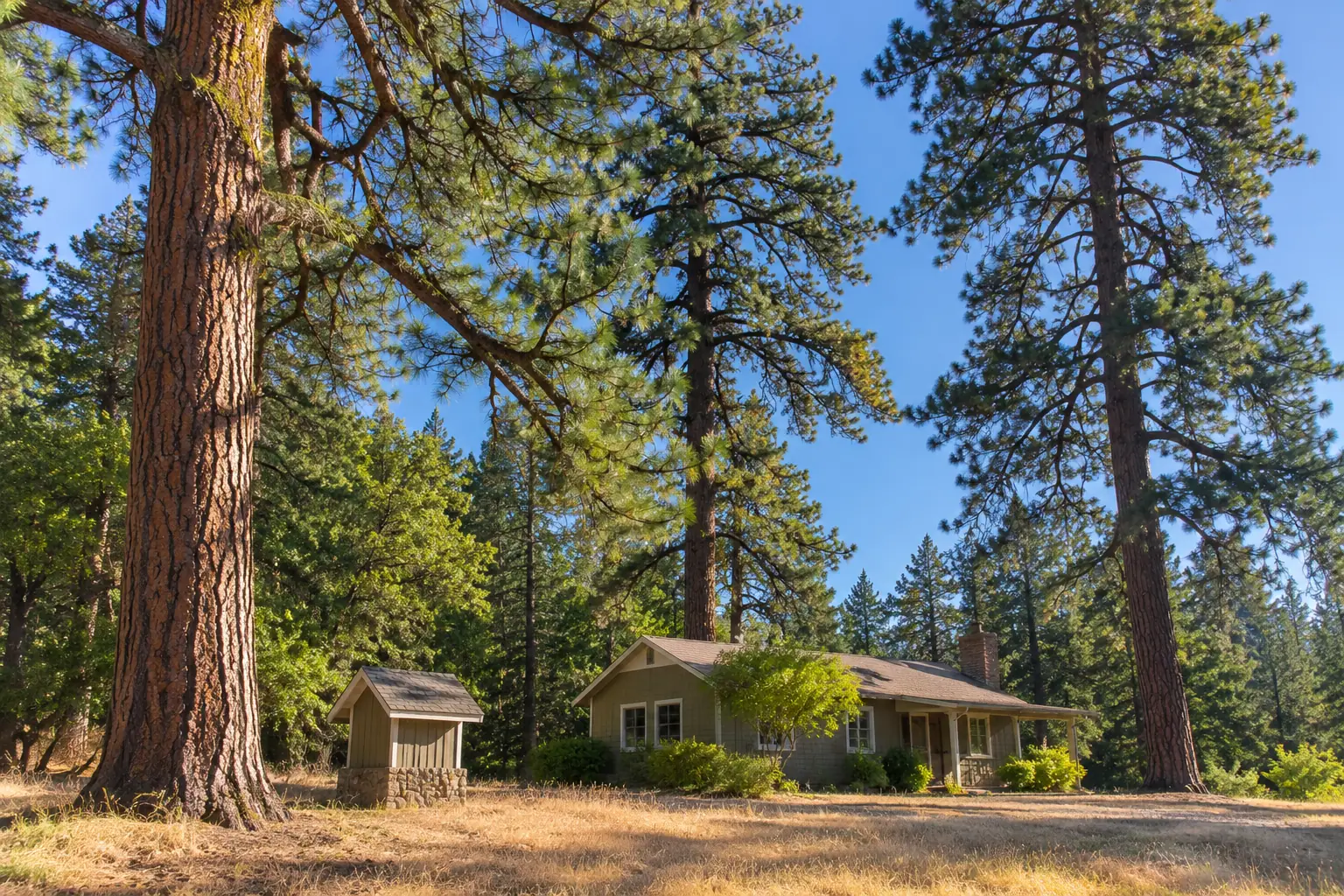
Removing a large tree in Rogue River usually means taking it down in pieces, because there is rarely room to drop a tall conifer whole near a house, well or line. Call (541) 507-9640 to reach a tree service. A call from this page goes to one outside contractor, not several, and its Oregon CCB license is current. Ask how it would bring the tree down and request a written estimate. Most ordinary estimates carry no charge, but that is the contractor's decision, so confirm it.
When a tree job counts as large
A tree job is large when the tree's height, spread or surroundings call for rigging, extra equipment or more than a day of work. Height matters most. A tree that would reach the house if it fell is a large job, even if a taller tree out in a field would be simpler.
A tree contractor will usually look at:
- Height and trunk diameter. These set how many pieces the tree will come down in and how heavy each one is.
- What is underneath. Roofs, outbuildings, fences, gardens, wells and septic fields limit where pieces can land.
- Overhead lines. Service lines to the house and distribution lines along the road both change the plan.
- Lean and condition. A healthy tree can be climbed and rigged. A dead or decayed one may not be safe to climb.
- Access. How close a truck, chipper or crane can get, and over what ground.
Three ways a big tree comes down
Most large removals use one of three methods, sometimes combined on the same tree.
Felling it whole
When there is open ground at least as long as the tree is tall, in a direction the tree can be steered, felling it in one piece is often the simplest choice. This is more common on acreage than in town. The company still has to judge lean, wind and the weight of the crown.
Climbing and lowering in sections
When there is no room to fell, a climber removes limbs and then cuts the trunk from the top down, lowering each piece on ropes. This is slower but lets the tree come down in a tight space beside a house or shop. It needs a sound trunk, because the climber is tied to it.
Crane removal
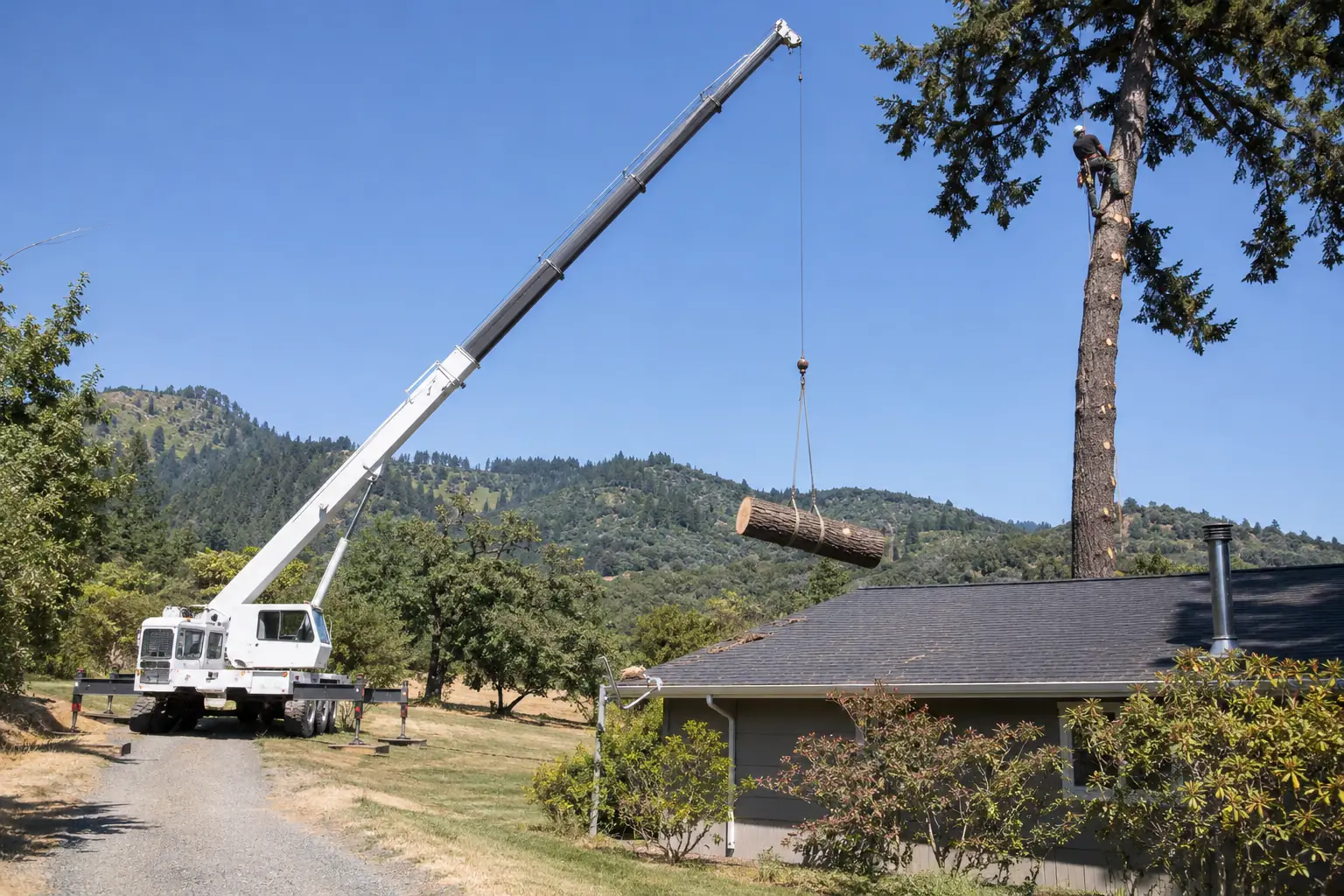
A crane lifts each section off the tree and sets it down where it can be cut up. Cranes help when a tree is dead, decayed, leaning over a roof, or too big to lower by rope. They also need a solid, level place to set up close to the tree, which can be hard to find on a rural lot. The tree removal cost guide lists published crane price ranges with their dates.
The company you are connected with will choose the method after it sees the tree. Ask it to explain why that method fits your site.
Getting equipment in on rural lots
Access often decides the price and the method on large jobs outside Rogue River. A long gravel drive, a locked gate, a narrow bridge or culvert, a steep slope or soft ground in a wet month can each keep a truck or crane from getting close.
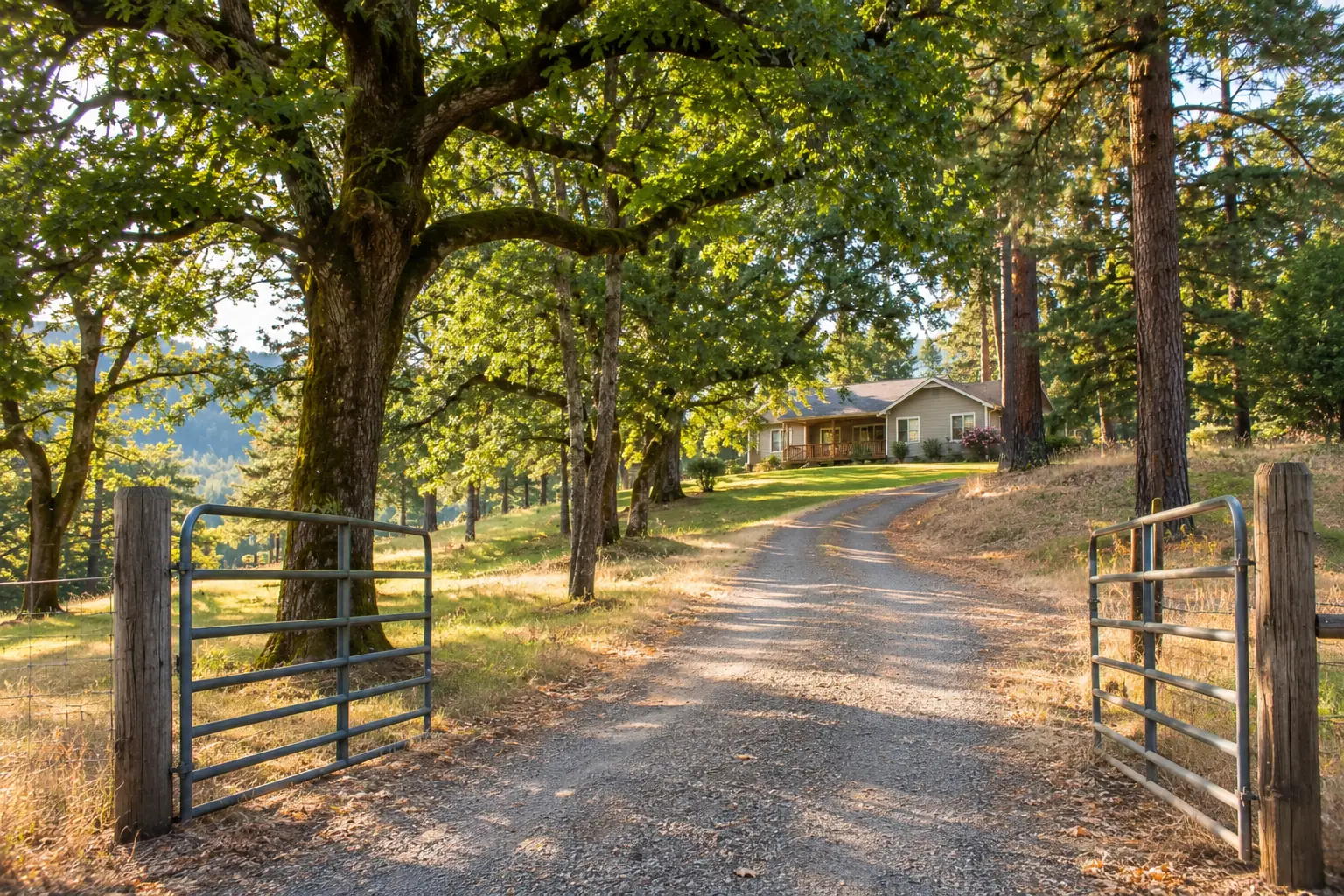
Before the estimate visit, walk the route from the road to the tree and note:
- The narrowest point and the lowest overhead clearance, such as branches or wires over the drive.
- Any gate width and who has the key.
- Culverts, bridges or septic lines the route crosses.
- Where a truck could turn around.
- Whether the ground stays firm after rain.
Sharing this up front lets the company price the job once instead of changing the plan on the day. The rural acreage guide has more on driveways, turnarounds and seasonal limits.
Protecting the septic system and the well
Heavy equipment and a septic field do not mix. OSU Extension's Why do septic systems fail? says driving, parking or building on top of the soil absorption field can damage it, and that heavy equipment can compact the soil. It also notes that tree roots can clog the absorption field, which is one reason homeowners take out large trees beside a drainfield in the first place.
On a large removal, that means:
- Mark the tank, the lid and the edges of the drainfield with flags or stakes before the crew arrives.
- Ask the company to keep trucks, chippers, cranes and log piles off the field.
- Plan where logs will be dropped so they do not land on the field.
- Mark the wellhead and any buried water line to the house and outbuildings.
Large trees near power lines
A large tree within reach of any overhead line needs Pacific Power in the plan. The utility's tree page says never to prune limbs or remove trees near power lines, and that customers can request an evaluation by an arborist the utility sends out. For the service line that runs to your home, the same page says Pacific Power can provide a free temporary disconnect so licensed professionals can work safely. Questions go to 1-888-221-7070, the number on that page.
Tell the company about every line within the tree's height when you call (541) 507-9640. A tree that is 80 feet tall can reach a line 70 feet away.
Large trees close to the river or a creek
If a big tree stands near the Rogue River, Evans Creek or Wards Creek, check the riparian rules before anything is cut. The Jackson Soil and Water Conservation District's guide to the city rules gives the setback as 75 feet from the top of the bank on the Rogue River and 50 feet on streams including Evans Creek and Wards Creek. Clearing inside those areas is not allowed without city approval. Removing a hazardous tree is allowed with approval, and native replanting is generally required.
Outside city limits, the district's county guide uses the same 75 and 50 foot setbacks and lists removing healthy trees among the things that need prior approval. The riverbank tree removal guide explains who to ask and what replanting looks like.
What happens to the wood
A big tree leaves a lot of material, and the estimate should say what happens to every part of it. Common choices are chipping and hauling the brush, cutting the trunk into firewood rounds, leaving logs on site, or hauling everything away.
If you plan to sell logs from forestland, check with the Oregon Department of Forestry first. ODF's notification page says you must notify the department at least 15 days before starting a forest operation, through its online system. Ask ODF whether your project counts as an operation before the work is scheduled.
Large tree work in fire season
Fire season rules limit when saws can run on lands ODF protects around Rogue River. The Southwest Oregon District's 2026 regulated closure proclamation allows power saws at any hour when fire danger is low, until 1 p.m. and from 8 p.m. on at moderate danger, until 10 a.m. and from 8 p.m. on at high danger, and not at all at extreme danger. A shovel, an extinguisher rated eight ounces or larger and a one-hour fire watch after each saw is used are also required.
On a large job, these hours can stretch the work over more days. Many owners schedule big removals for the cooler months for that reason.
Getting a written estimate
When you call (541) 507-9640, you are connected with an outside tree contractor with a current Oregon CCB license. Charging for the estimate visit, or not, is the company's choice. On a routine big-tree job there is usually none, and a quick question on the call settles it. This site does no tree work and does not set prices.
A useful estimate for a large tree lists the removal method, what equipment will be used and where it will sit, how the wood and brush are handled, whether the stump is ground, and what the company will avoid on your property. If a crane or a utility disconnect is needed, the estimate should say who arranges it.
You can check the company's license on the Oregon CCB license search. For the stump left behind, see the stump grinding page. The home page lists all the services covered here.
Frequently asked questions
How much does it cost to remove a very large tree?
Published national ranges for trees over 100 feet run into the thousands of dollars, and crane work adds more. Access, lines and nearby buildings change the number a lot. The company's written estimate is the price that counts.
Can a large tree be felled in one piece?
It can when there is clear ground at least as long as the tree is tall in a safe direction. Near buildings, wells or lines, the tree usually comes down in sections by rope or crane.
Will the trucks damage my yard or driveway?
Heavy equipment can rut soft ground and compact soil. Ask the company where it will drive and park, and whether it uses mats or plywood. Keep all equipment off the septic drainfield.
Can I keep the wood?
In most cases you can. Tell the company before it prices the job whether you want firewood rounds, logs left whole or chips. Leaving wood on site often changes the cleanup cost.
Is winter a better time to remove a big tree?
It can be. ODF's fire season limits on saw hours end when fire season ends. Wet ground can limit access, though, so ask the company what works best for your site.