
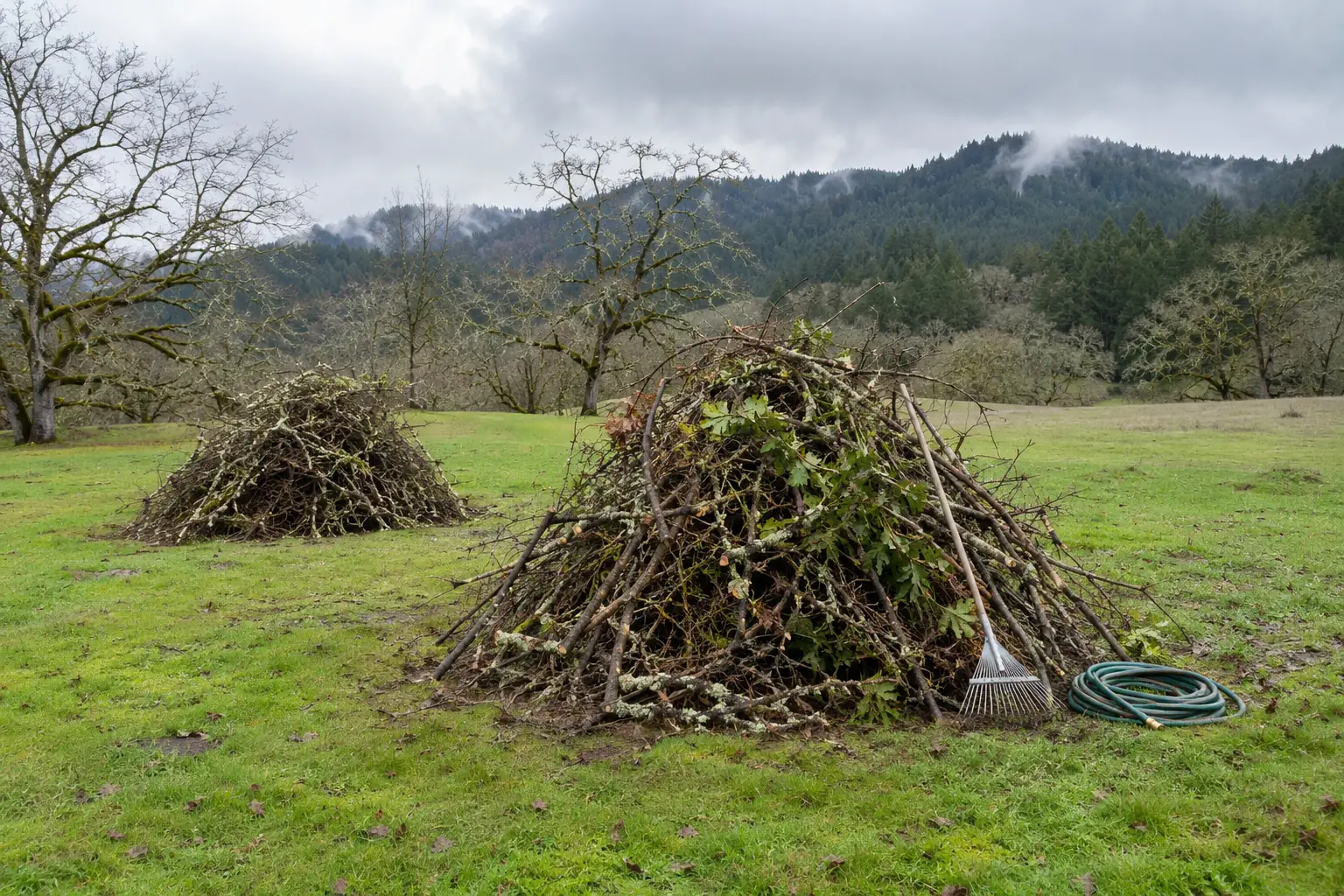
Brush and debris removal around Rogue River means getting limbs, slash, blackberry and storm wreckage off the property by chipping it, hauling it away or, on legal burn days only, burning it. Which choice fits depends on where you live and the season. Make a free call to (541) 507-9640. That number rings a single tree service with an active Oregon CCB license, and a written price is yours to request.
This site passes your request to that company, which does the cleanup and sets the price. The home page explains how the referral works.
Chipping, hauling or burning
Each method has its own cost, season and rules. On open acreage far from buildings, limbs can also be cut small and scattered to rot.
| Method | What happens | Works well for | Limits |
|---|---|---|---|
| Chipping | A chipper turns limbs into chips that are spread on site or trucked away | Pruning debris, storm limbs, pine slash in spring and summer | Fresh chips piled against the house add fuel; large logs need cutting first |
| Hauling | Brush and logs are loaded and taken to a transfer station or a processor | Tight lots, in-town yards, jobs where nothing can stay | Usually the costliest choice; haul distance adds time |
| Burning | Dry, stacked yard debris is burned on a legal burn day | Large piles on acreage outside fire season | Permits, burn days, setbacks and a full ban during fire season; never land clearing waste in town |
Chipping has an added benefit with conifers. The Oregon Department of Forestry's slash management fact sheet, dated April 2021, says chipping or masticating wood to less than 3 inches across makes it unsuitable for most bark beetles, and that spreading the chips in the sun helps them dry out.
Burning rules inside Rogue River city limits
Inside the city, chapter 8.10 of the Rogue River Municipal Code allows backyard pile burning only under a long list of conditions. Section 8.10.020 bans burning household garbage, plastic, commercial waste and land clearing waste at any time of year. For yard debris, the conditions for a backyard pile include:
- A burn permit from Jackson County Fire District No. 1.
- A call to the Jackson County Burn Line, 541-776-7007, to confirm it is a DEQ authorized burn day.
- Wind under 10 miles per hour, daylight only, and an adult watching the whole time.
- Dry yard debris, trimmings and clippings only, loosely stacked, with 15 feet cleared around the pile, no wires overhead and a hose connected.
- Size limits by distance: up to six feet across and three feet high when the pile is 50 feet or more from any building, combustible fence or other burnable material; three feet across and two feet high between 25 and 50 feet; nothing within 25 feet.
- No open burning at all during fire season, as declared by ODF.
Section 8.10.030 sets a fine of up to $500. With those size limits, a big storm cleanup in town usually ends up chipped or hauled.
Burning outside town: county, fire district and DEQ
Outside city limits, the same basic pattern holds: get the permit your fire agency requires, check the burn day, and never burn in fire season. Jackson County's open and barrel burning page says no open or barrel burning is allowed anywhere in the county during fire season, and tells residents to get a permit from their fire protection agency and call 541-776-7007 for the daily burn status. It also bans all open and barrel burning from November 1 through the end of February inside the Medford-Ashland Air Quality Maintenance Area, and says that if you take your vehicle to a DEQ inspection station, you are inside that area.
Fire districts set their own permit rules. For the Evans Creek valley, Evans Valley Fire District #6 in Wimer says on its burn season page that permits are no longer required for open and barrel burning of yard debris, brush and untreated wood on designated burn days. It asks that open burns be at least 50 feet from structures and combustibles, says burning slash after logging needs an ODF permit, and asks callers to use the burn line rather than the district for burn day status. Other communities fall under other districts, so check with yours.
The state adds its own layer. DEQ's Southern Oregon outdoor burning guide says open burning is allowed in the Rogue Valley outside fire season on burn days only. For Merlin, on the Josephine County side, it lists 541-476-9663 for burn day status. It bans burning plastics, rubber, tires, petroleum products and anything that makes dense smoke, and says fines can reach $12,000 per day. In fire season, ODF's 2026 Southwest Oregon proclamation prohibits backyard debris burning across the lands the district protects.
A yard debris drop-off you can use
If you would rather haul small loads yourself, Rogue Disposal and Recycling takes yard debris from the public at its Rogue Transfer and Recycling site, 8001 Table Rock Road in White City. Its posted regular hours are Monday through Saturday, 7 a.m. to 5 p.m., closed Sunday, and it lists its customer service number as 541-779-4161.
The company's yard debris drop-off page, checked in November 2026, lists these terms:
- A minimum charge of $12.60 for one cubic yard, about half the bed of a full-size pickup, and $12.60 for each added cubic yard.
- Brush and woody material up to 4 inches in diameter and 48 inches long, along with leaves, grass, weeds and garden waste.
- No plastic bags, bark, dirt, sod, rocks, plastic pots, processed wood or trash.
Rogue Disposal customers can also add an every-other-week yard debris cart, which its curbside page lists at $10.32 a month with a one-year commitment. Ask your own garbage hauler what it offers, since service varies by address. Logs, stumps and limbs over 4 inches are a job for the tree company's chipper or truck.
Bark beetles and fresh slash
Fresh conifer debris left lying around in the wrong months can breed bark beetles that move on to your standing trees. The ODF fact sheet above gives the timing by species.
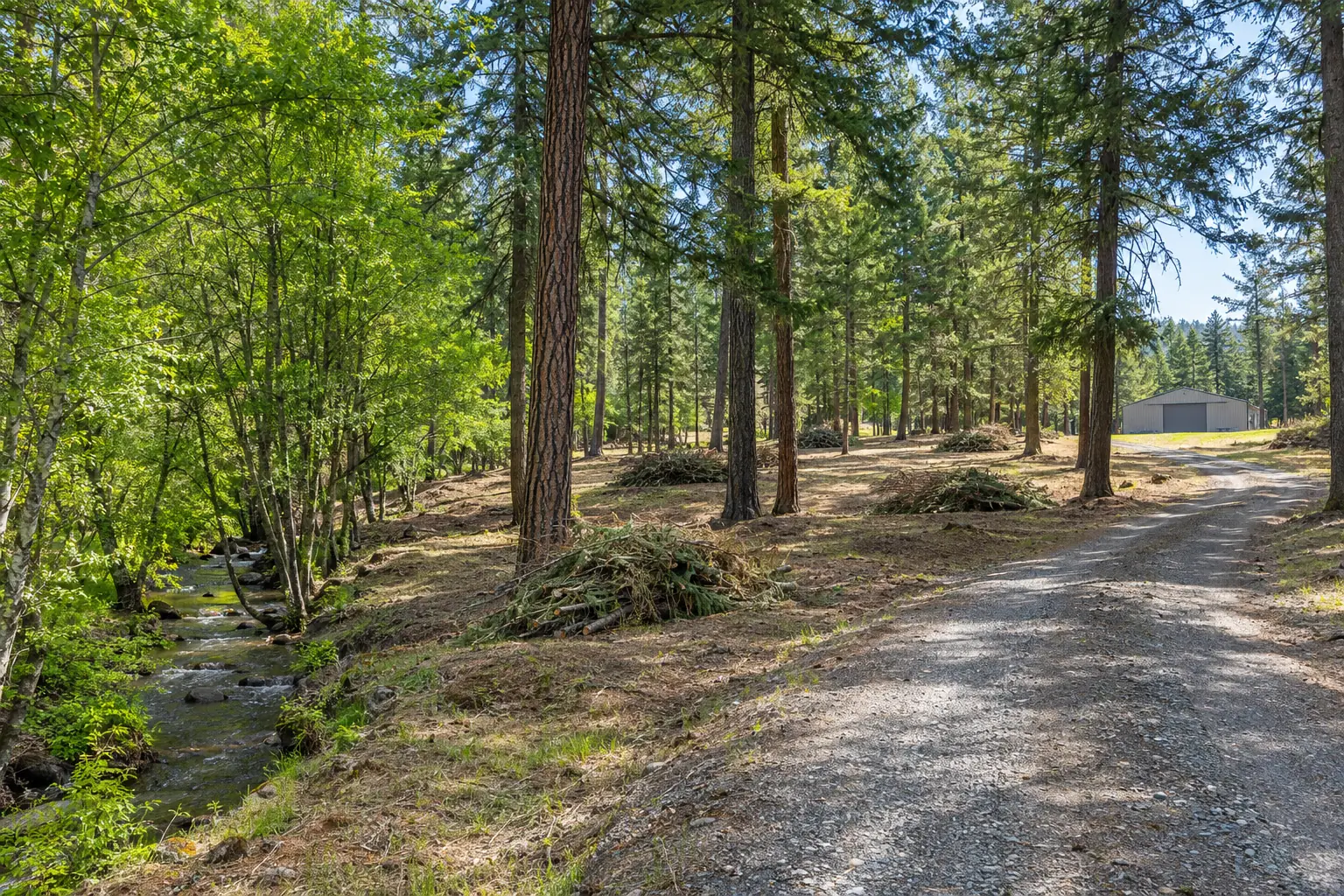
- Pines. Ips beetles breed in pine slash 3 to 8 inches across. ODF says slash created from January through September should be destroyed before beetles fly in April, or within two months. Slash cut from October through December can be scattered in the sun to dry before spring.
- Douglas-fir. The Douglas-fir beetle attacks trees and logs more than 10 inches across and favors downed trees, often after storm blowdown. ODF says that material should be salvaged or destroyed before the first April after the event.
On most home sites, chipping or hauling is the simpler answer. The tree trimming and pruning page covers timing pine pruning to avoid the problem in the first place.
Storm debris: what can wait and what cannot
Limbs and brush lying in the yard, touching and blocking nothing, can wait for a normal estimate. A tree on a roof, car or fence, a trunk across the drive, a broken limb hanging overhead, or anything on a power line cannot; start with the emergency tree removal page, and for a downed wire, which also demands 35 feet of distance, call 911 and then Pacific Power at 1-877-508-5088.
Two kinds of storm debris should not sit long: downed Douglas-fir over 10 inches, which should be handled before April, and summer brush piled near the house, which is fuel until it is gone. The storm damage page covers insurance photos and first steps.
Brush, debris and defensible space
Clearing brush near the house is the core of defensible space, and a brush pile left beside the house works against it. The Oregon State Fire Marshal's defensible space page describes zones out from the home: the first 5 feet, 5 to 30 feet, and 30 to 100 feet or more.
Its advice includes gravel or pavers and no bark mulch or juniper in the first 5 feet, grass under 4 inches, brush cleared from under trees, 10 feet of clearance around propane tanks, and a driveway open 13 feet 6 inches high and 20 feet wide for fire engines. OSFM also offers a free defensible space assessment. For new homes in mapped wildfire hazard areas, Jackson County's Land Development Ordinance, chapter 8 requires firewood piles, slash piles and woodsheds to sit at least 30 feet from structures. That is a sensible distance for any brush pile waiting for burn season.
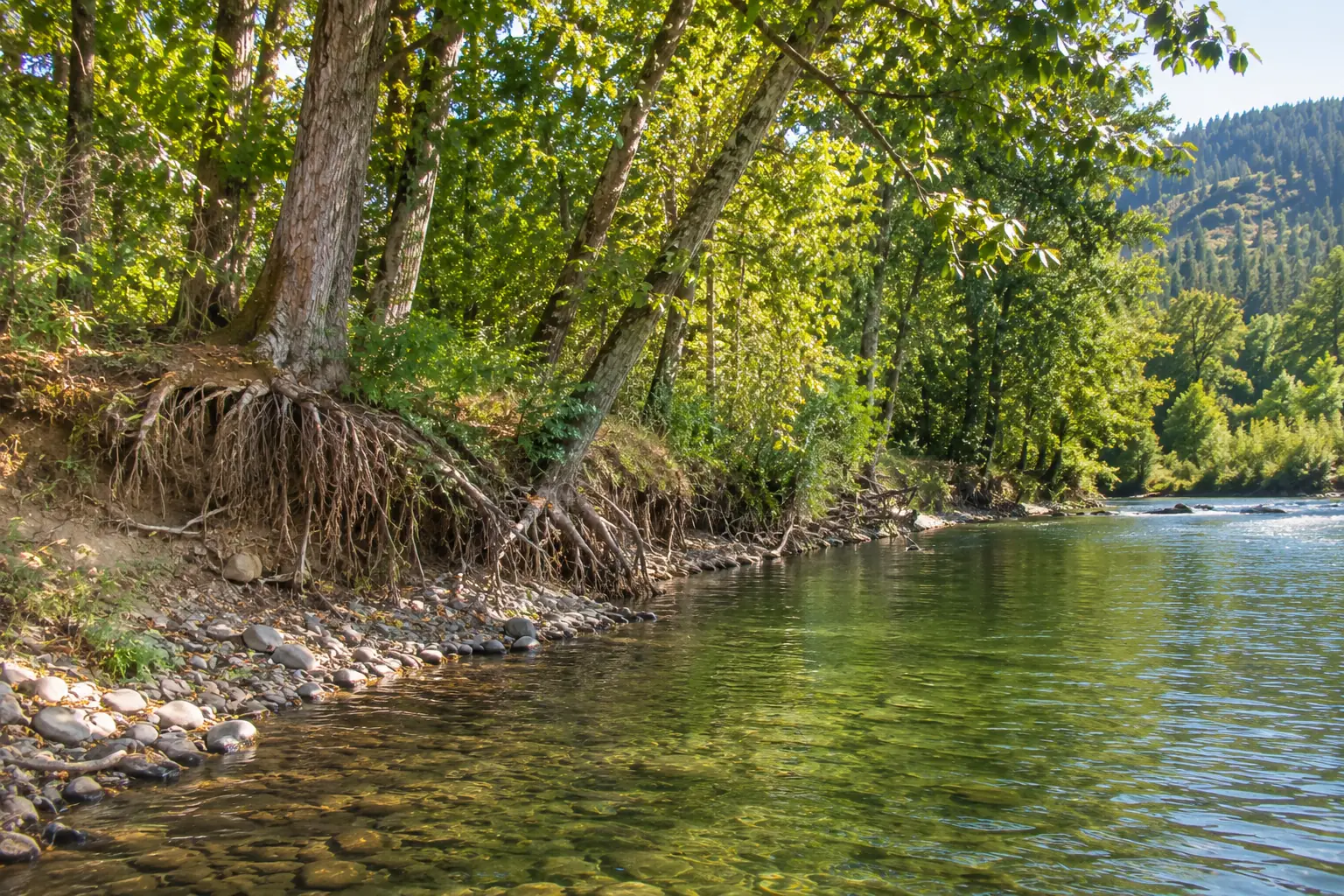
Near the creeks, the rules pull the other way. The city's riparian chapter prohibits dumping, piling or composting yard debris in the corridor, except single-family composting kept at least 10 feet from the top of the bank, and it bans dumping yard debris in streams or storm drains. Along Evans Creek, Wards Creek and the Rogue, haul or chip the brush rather than leaving it on the bank. If a fire has already burned through your trees, the burned tree removal guide covers what to do next, and the lot and land clearing page covers larger fuel reduction work.
What brush removal costs
Brush removal is priced by the load, by the hour or by the acre. HomeGuide's brush pile removal cost guide, written January 6, 2026, lists these national averages:
| Job | Average cost |
|---|---|
| One pickup-truck load of brush, about 2 to 4 cubic yards | $150 to $200 |
| Cleanup labor | $50 to $80 per hour |
| On-site chipping | $100 to $150 per hour |
| Light brush, few or no trees | $800 to $1,800 per acre |
| Heavy brush, about half trees | $1,600 to $3,000 per acre |
| Wooded land, trees and brush | $2,500 to $5,000 per acre |
The guide also lists minimum fees of $250 to $600 per visit for acreage work. Around Rogue River, the drive to White City, a long gravel driveway, muddy ground and whether chips can stay on site all move the price. The tree removal cost guide has prices for the removal side of a job.
Getting a cleanup estimate
Dial (541) 507-9640, free of charge, and your request goes to one licensed tree company working around Rogue River, not to several. That company prices the cleanup. Quotes on routine brush jobs usually cost nothing, and it can confirm as much. Tell it roughly how many pickup loads there are, the thickest limbs, whether chips and firewood can stay, what the pile sits near, and whether you are inside city limits.
You can check the company's license on the Oregon CCB license search.
Frequently asked questions
Can I burn brush in Rogue River?
Inside city limits, only small yard debris piles, with a Fire District No. 1 permit, on a DEQ authorized burn day, outside fire season, and under the city's size and distance limits. Land clearing waste may never be burned in town.
How do I find out if today is a burn day?
Call the Jackson County Burn Line at 541-776-7007. In Josephine County, which includes Merlin, DEQ lists 541-476-9663.
Where can I take yard debris near Rogue River?
Rogue Transfer and Recycling in White City takes yard debris from the public for a fee per cubic yard. Brush must be 4 inches or less across and 48 inches or less long, with no bags, dirt or rocks.
Can I leave brush piles by the creek?
No. The city's riparian rules prohibit piling or dumping yard debris in the creek corridor, apart from small home compost kept 10 feet back from the top of the bank. Outside town, the Jackson Soil and Water Conservation District's county guide lists dumping yard debris near streams among the things that need prior approval.