
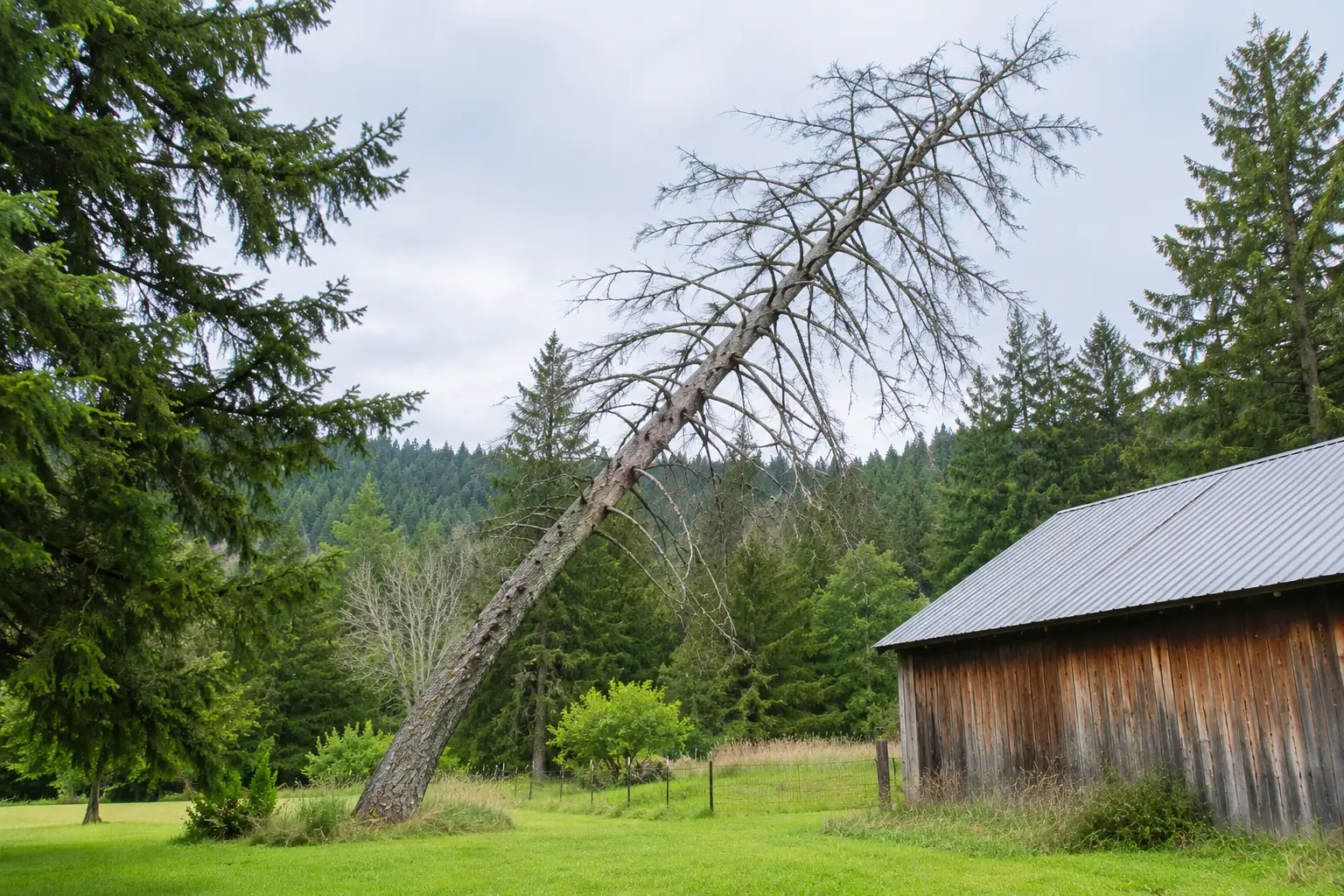
A hazard tree in Rogue River is one with a defect that could make it fail and land on something you care about, such as the house, the well house, the driveway or a place where people gather. Call (541) 507-9640 to reach a tree service: one outside tree contractor, and one only, which holds a current Oregon CCB license. Request an inspection and an estimate on paper. A fee for quoting a routine hazard tree would be unusual, but let the contractor say so.
What makes a tree a hazard
A tree becomes a hazard when it has two things at once: a weakness that could cause it to fail, and something it would hit. A cracked tree in the middle of a back pasture is a weak tree. The same tree twenty feet from a bedroom is a hazard.
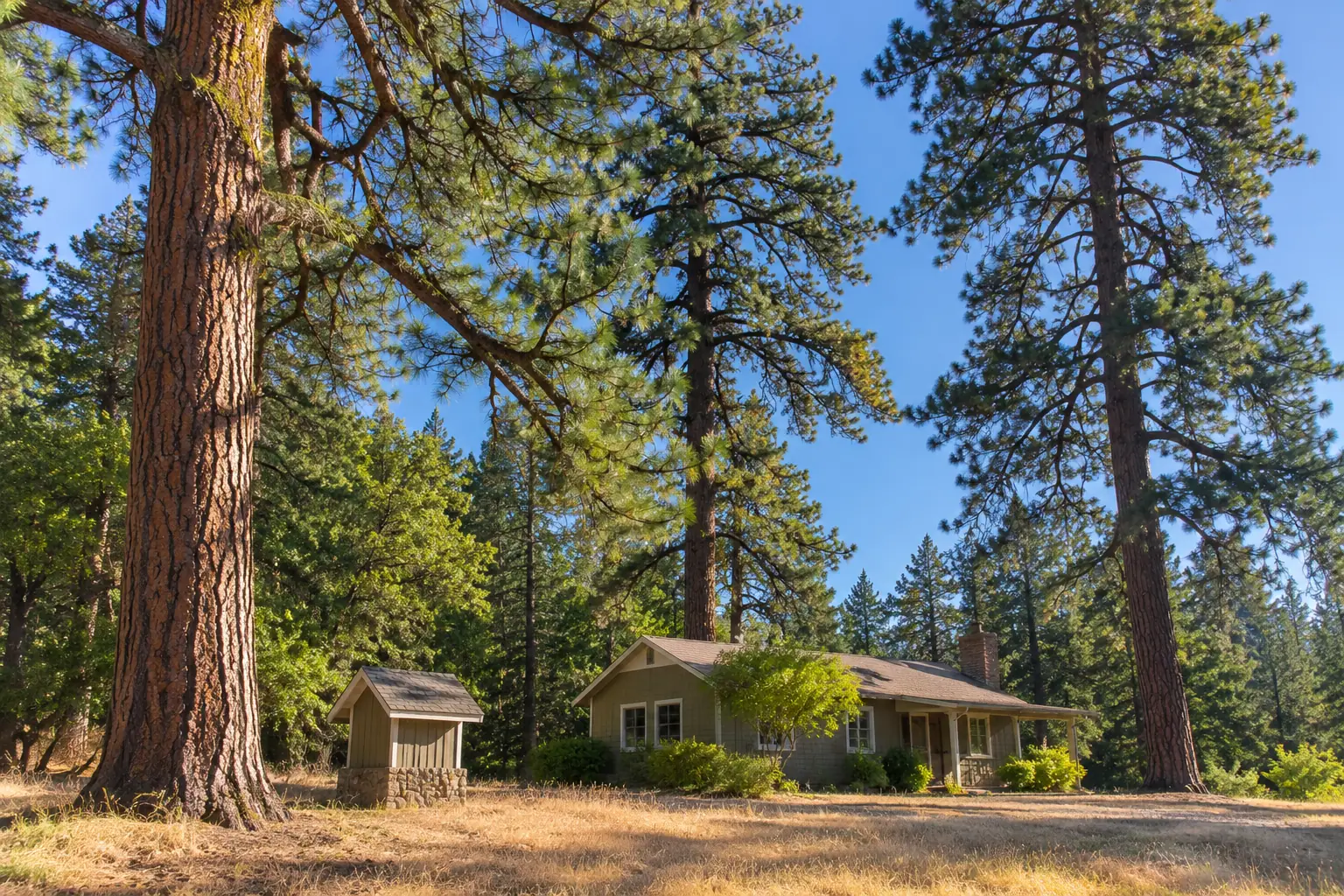
Oregon State University Extension's publication Learn to recognize hazard trees after a fire lists the common factors behind tree failure even before any fire. They include tree species and age, decay, wounds, cankers, seams, lean, branch angle and type, crown vigor, crown shape and the condition of the roots. Most hazard trees show more than one of these.
Warning signs you can check from the ground
You can spot most early warning signs from the yard with a pair of binoculars. Walk all the way around the tree and look from top to bottom.
- A dead or thinning top. On big conifers, a top that has gone brown or bare while the lower crown stays green often points to root or stem trouble.
- New lean. Many trees grow with a lean. A lean that has changed, or soil that has cracked or lifted on the side away from the lean, is a different matter.
- Cracks and seams. Long vertical splits in the trunk, or a seam where two trunks meet in a tight V, can open in wind or under snow.
- Mushrooms, conks or soft wood at the base. Fungus growing from the trunk or root flare usually means decay inside.
- Hanging or broken limbs. A limb caught in the crown can fall without warning.
- Root damage. Trenching for a water line, a new driveway cut or heavy trucks parked over the roots can weaken a tree years before it shows.
- Bark falling away or sawdust in the bark cracks. Both can mean insects or decay working under the bark.
None of these signs alone proves a tree will fall. They are reasons to have someone who does tree work look closely. Treat this list as a starting point, not a diagnosis. If the tree has already split or started to go over after a storm, the emergency tree removal page is the better place to start.
How a company judges the risk
Tree professionals usually rate risk by pairing how likely a part is to fail with what it would hit. The OSU Extension publication above shows a version of the International Society of Arboriculture rating method in seven steps:
- Name the possible target, such as the roof, the driveway or a play area.
- Identify which part of the tree could strike it.
- Rate how likely that part is to fail: improbable, possible, probable or imminent.
- Rate how likely it is to hit the target if it fails.
- Combine those two into an overall likelihood.
- Estimate how bad the result would be, from negligible to severe.
- Assign a risk level: low, moderate, high or extreme.
You do not need to run the numbers yourself. It helps to know the method, though, because it explains why a company might recommend removing one tree now and watching another for a year. Ask the company you are connected with to walk you through how it rated your tree.
Hazard trees around the house, well and septic
On rural lots outside Rogue River, the targets often include more than the house. A tree can threaten a well house, a pump line, a shop, a fence that holds livestock, or the septic system.
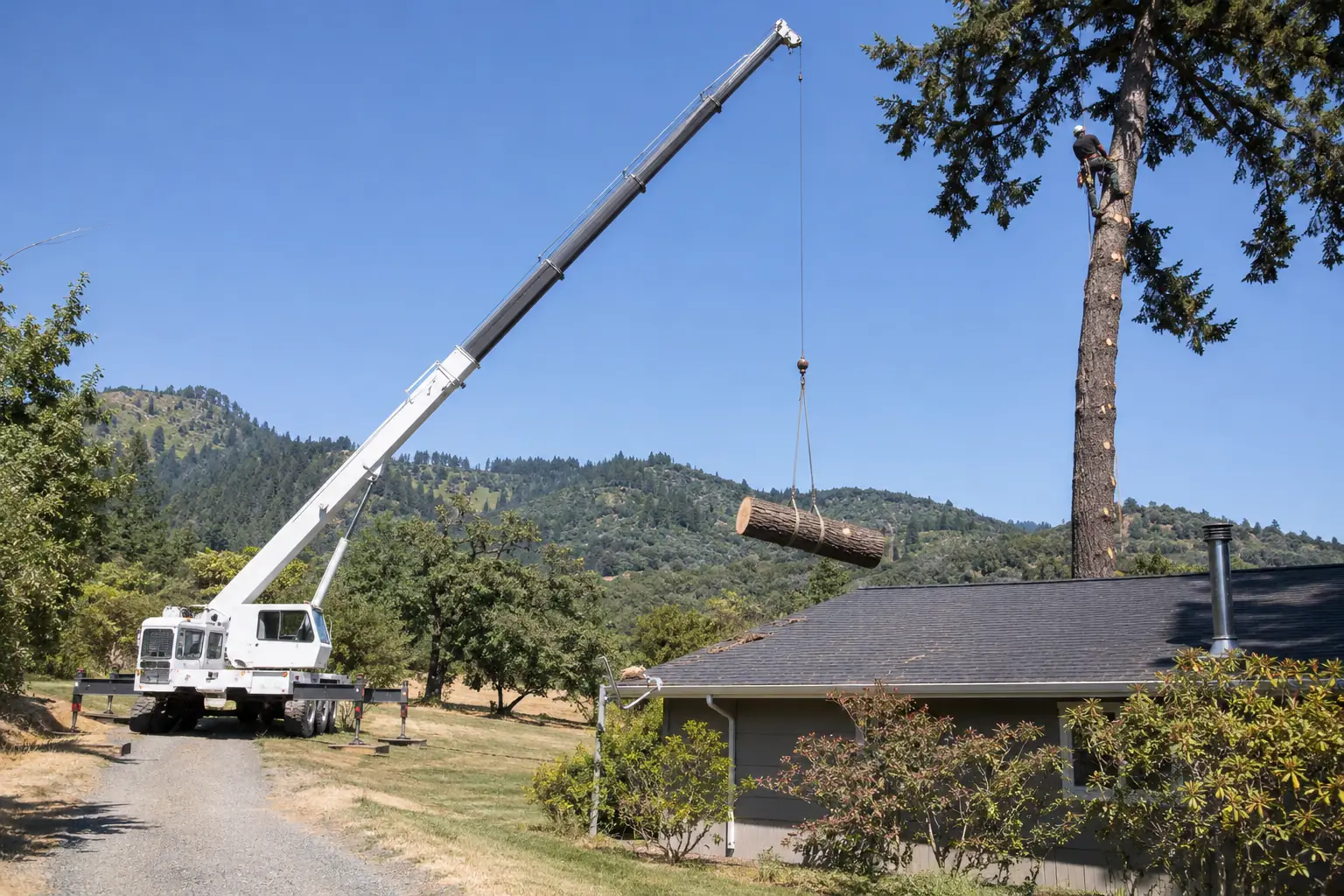
Septic systems deserve extra care in two ways. First, OSU Extension's Why do septic systems fail? notes that tree roots can clog the soil absorption field, so a tree whose roots are already in the drainfield is a slow problem in its own right. Second, the same publication says driving, parking or building on top of the absorption field can damage it. A removal plan has to keep heavy trucks off the field, even if that means a longer carry for the logs.
Tell the company where your tank, drainfield, wellhead and buried water lines are before it prices the job. If you do not know, look for the original permit drawings or ask a septic service to locate the tank. The rural acreage guide has a checklist for this.
Hazard trees inside Rogue River city limits
Inside city limits, two parts of the city code are most likely to matter for a hazard tree. Both are in the Rogue River Municipal Code, which the city links from its municipal code page.
The first is Chapter 12.20, the street tree ordinance. It covers trees in the street area, an approved species list, spacing between trees, and a section that treats dangerous trees as a nuisance. If the hazard tree stands between the sidewalk and the street, or you are not sure whose tree it is, call City Hall at (541) 582-4401, the number on the city's planning page, before work starts. Rogue River has been a Tree City USA for more than 40 years, according to the city's home page, and its Tree City Committee serves as an advisory committee to the Public Works Director, according to the city's boards and committees page.
The second is the riparian ordinance for land near the Rogue River, Evans Creek and Wards Creek. The Jackson Soil and Water Conservation District's guide to the city's riparian rules says removing a hazard tree that poses an obvious safety risk is allowed, that city approval is required beforehand except in emergencies, and that replacement with native species is generally required, typically at a 3 to 1 ratio. The Rogue River tree rules guide goes through both chapters.
Hazard trees on county land near water
Outside city limits, Jackson County's riparian setbacks apply along the river and streams. The Jackson Soil and Water Conservation District's county guide gives the setbacks as 75 feet from the top of the bank on the Rogue River and 50 feet on streams, and says trees and shrubs inside those areas are to be kept in place by default. It lists removing healthy trees among the things that need prior approval, and it does not address hazard trees by name.
That leaves a gap you should close before cutting. Call Jackson County Development Services, Planning Division, at 541-774-6907, the number on the county's planning page, and describe the tree, its defect and what it threatens. Keep notes on who you spoke with. The riverbank tree removal guide covers erosion and replanting on banks.
Removal or a smaller fix
Not every hazard tree has to come all the way down. Depending on the defect, a company may suggest removing one bad limb, reducing the height of a tree with a weak top, or cutting a tree down to a tall stub that stays standing as wildlife habitat away from any target. Other times full removal is the only safe answer.
Ask the company to explain each option it rules out and why. A written estimate that lists more than one choice, with a price for each, makes the decision easier. The large tree removal page covers what happens when the hazard tree is a tall conifer near the house.
Hazard trees near power lines
If the hazard tree leans toward an overhead line, the utility has to be part of the plan. Pacific Power's tree page tells customers never to prune limbs or remove trees near power lines, says customers can request an evaluation by a professional arborist the utility sends out, and lists 1-888-221-7070 for questions. Once a tree is actually leaning on the wire, that number no longer fits. Move 35 feet off, dial 911, and use the utility's 1-877-508-5088 number afterward. For the line running from the pole to your house, the same page says Pacific Power can arrange a free temporary disconnect so professionals can work safely.
Getting an estimate for a hazard tree
When you call (541) 507-9640, you are connected with an outside tree contractor with a current Oregon CCB license. The company sets its own estimate terms. A hazard tree estimate is usually free, yet it is worth asking first. Before you sign, check that the estimate says:
- Which trees or limbs come down, and which stay.
- How the wood, brush and chips will be handled.
- Whether stump grinding is included.
- How trucks will reach the tree and what they will avoid, such as the septic field.
- Who is responsible for any city or county approval.
You can confirm the company's license on the Oregon CCB license search. Published price ranges with dates are in the tree removal cost guide, and the home page lists everything covered here.
Frequently asked questions
How do I know if my tree is dangerous?
Look for a dead top, a lean that has changed, cracks, fungus at the base, hanging limbs or lifted soil at the roots. Then think about what the tree would hit. A defect plus a target makes a hazard. A tree company can inspect it up close and rate the risk.
Do I need a permit to remove a hazard tree in Rogue River?
It depends on where the tree is. Near the river or a creek, the city's riparian rules call for approval beforehand except in emergencies, plus replanting. For a tree in the street area, call City Hall. Confirm with the city before cutting.
Can a hazard tree be saved instead of removed?
For some defects it can. Removing a bad limb or reducing the height can lower the risk for some defects. Other defects, such as heavy decay at the base, usually mean removal. Ask the company to price each option.
What if the hazard tree is on my neighbor's land?
Talk with your neighbor first and share what you have seen. Rules on who pays and who is liable vary, so check with your insurer or an attorney before cutting anything on land you do not own.
Will the company check for my septic system?
Ask it to. Tell the company where your tank and drainfield are, or have them located first. OSU Extension warns that driving or parking on a drainfield can damage it.