
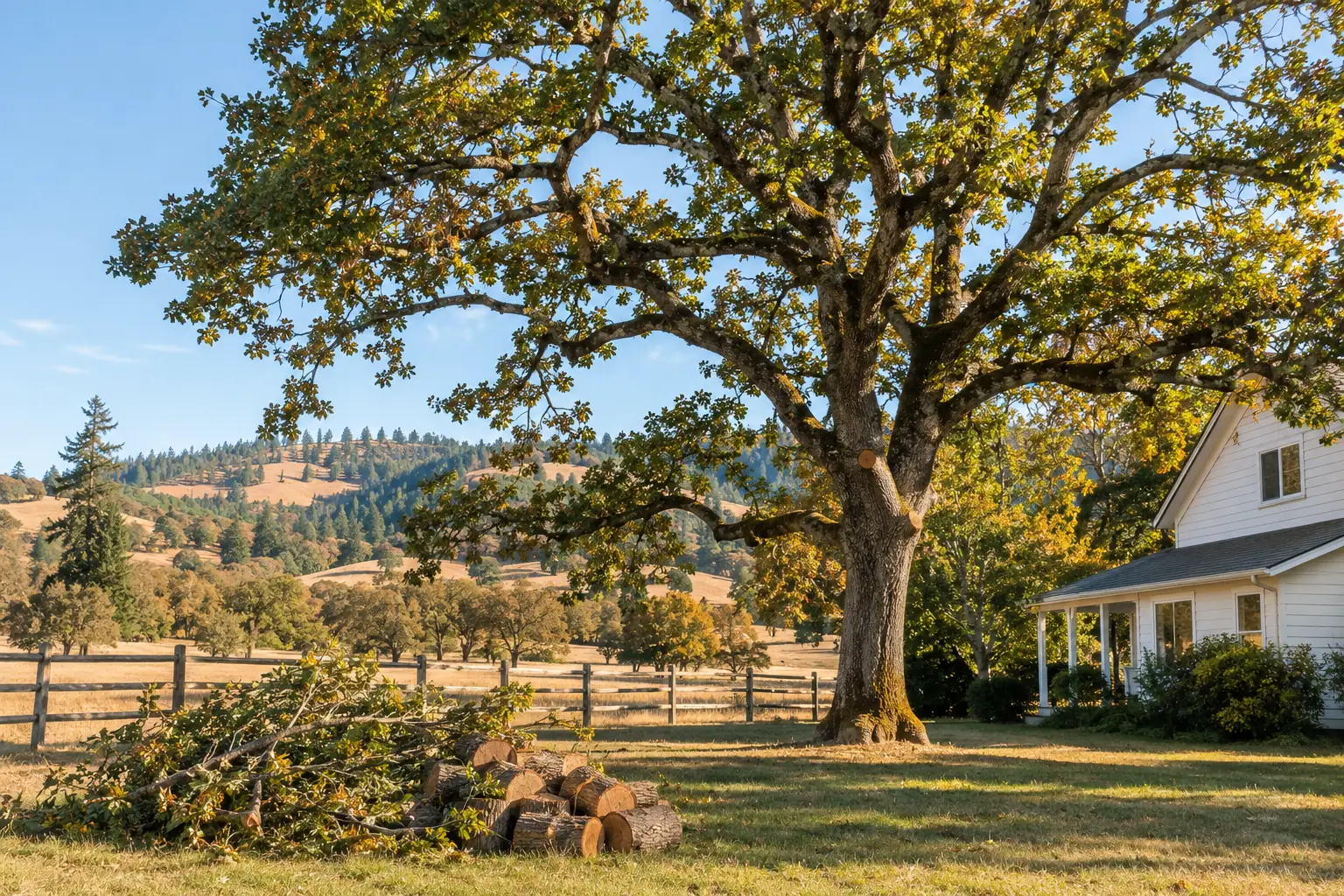
These guides answer the questions Rogue River property owners ask most before a tree comes down: what it costs, which rules apply, and how creeks, wildfire and rural access change the job. Each one cites official sources. When you are ready for an estimate, call (541) 507-9640.
What each guide answers
Each guide takes one question and works through it with local sources. Start with the one that matches your tree.
- How much tree removal costs around Rogue River. Published price ranges with dates, what pushes a quote up, and how to read a written estimate.
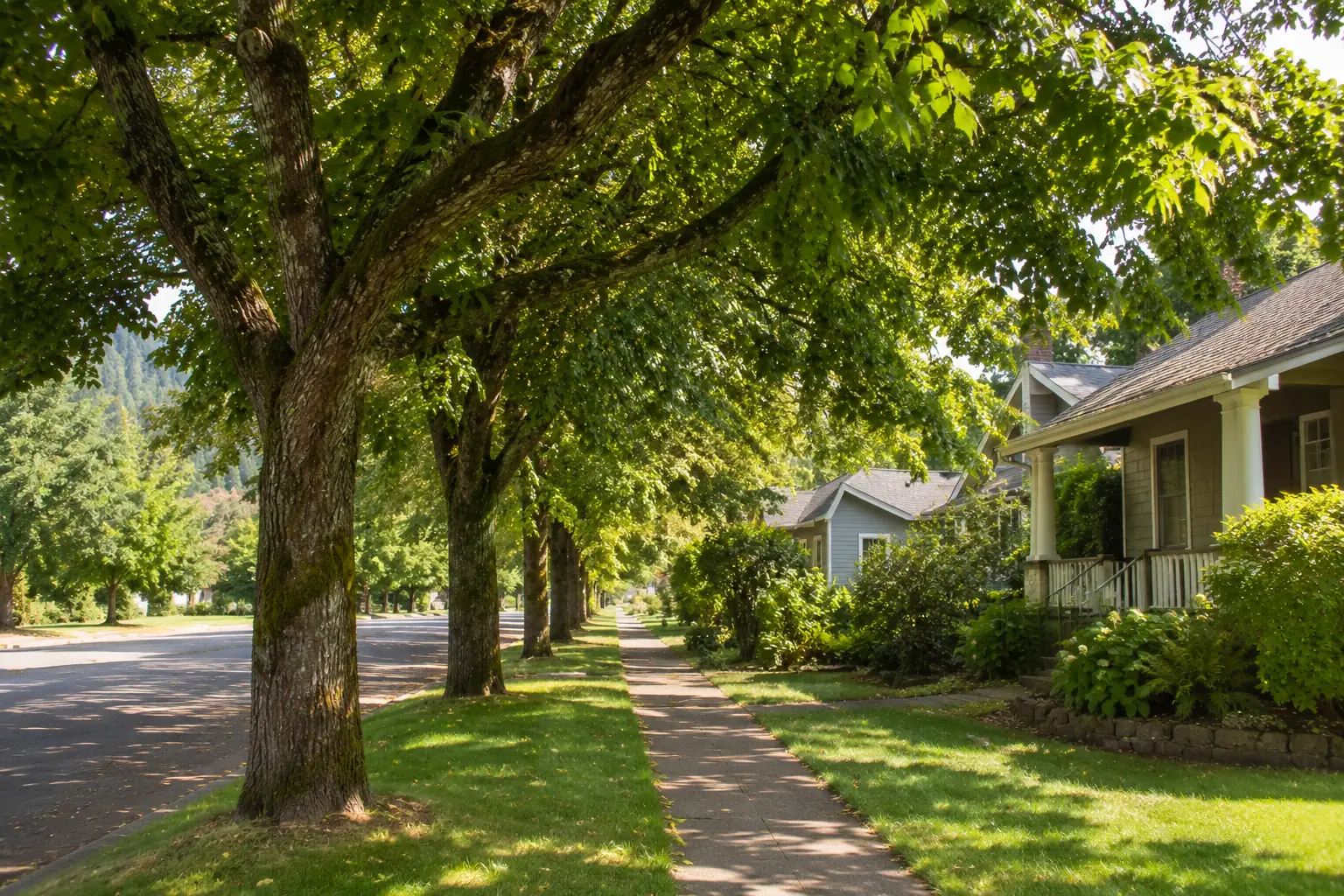
- City of Rogue River tree rules. The street tree chapter, the riparian ordinance, and Jackson County rules outside city limits.
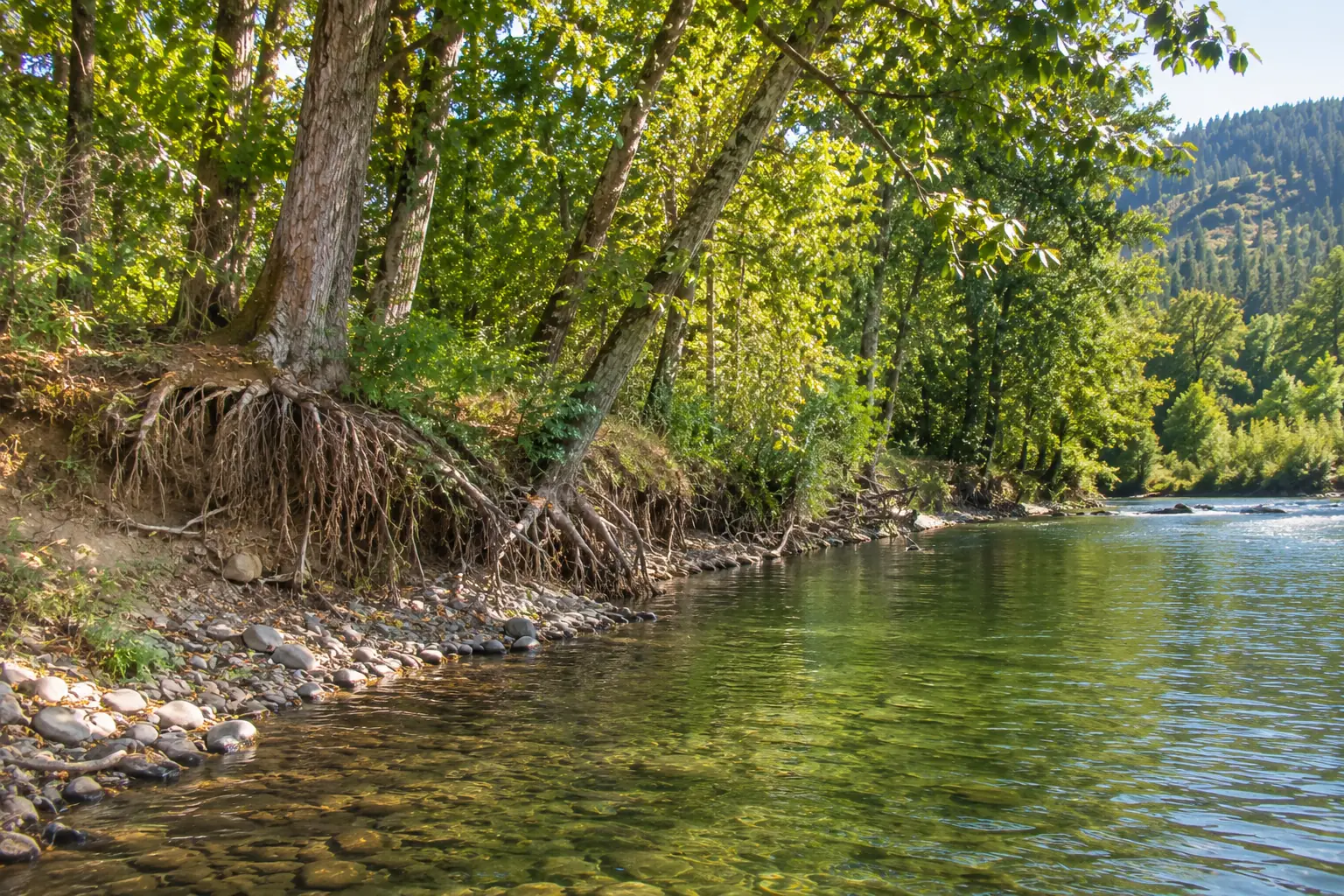
- Riverbank tree removal. Setbacks along the Rogue, Evans Creek and Wards Creek, erosion, and who to ask before cutting.
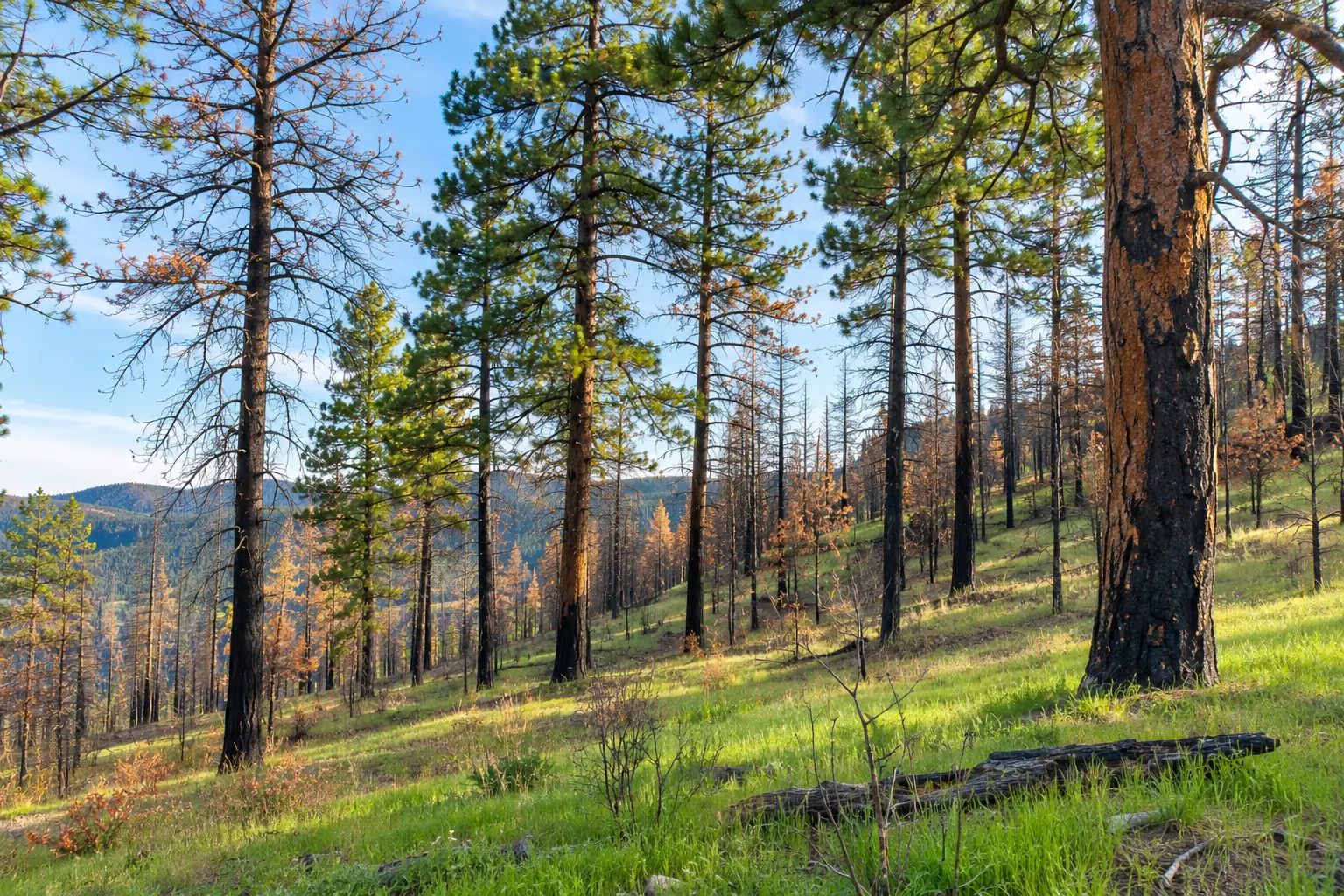
- Burned tree removal after wildfire. How to judge fire-damaged trees using OSU Extension guidance, and when waiting makes sense.
- Rural acreage tree removal. Long driveways, wells, septic systems and ODF fire season limits on equipment.
Where the facts come from
The guides lean on public sources you can check yourself. Links appear in the text next to each fact.
| Topic | Main source |
|---|---|
| City tree and creek rules | Rogue River Municipal Code on eCode360 |
| County rules outside the city | Jackson County Land Development Ordinance |
| Fire season saw limits | ODF 2026 regulated closure proclamation |
| Fire-damaged trees | OSU Extension EM 9557, Will my tree live? |
| Douglas-fir decline | OSU Extension EM 9406, Trees on the edge |
| Trees near power lines | Pacific Power vegetation management |
| Checking a contractor | Oregon CCB license search |
Rules and programs change. If a guide and an official source disagree, the official source wins. Call the city, the county or the agency to confirm before you rely on any rule.
How to use a guide with an estimate
A guide helps you ask better questions when the company comes out. It does not replace the company's look at your tree or a call to the city or county.
Before the estimate visit, read the guide that fits, then write down three things: where the tree sits in relation to buildings, lines and water; any rule that might apply; and what you want done with the wood. Bring those up on the visit. If the company's plan does not match a rule you read about, ask how it will handle that, and get the answer in the written estimate.
Questions the guides send elsewhere
Some questions belong to someone other than a tree company or this site. The guides point you to the right office instead of guessing.
- Insurance. Whether a policy pays for a fallen tree depends on the policy. Call your insurer before the tree is moved, and take photos first.
- A neighbor's tree. Who pays when a tree crosses a property line is a legal question. Talk with your insurer or an attorney.
- Riverbank and stream work. The city's riparian chapter names the Oregon Department of State Lands removal-fill permit among the state rules that can apply near the water. Ask the city or county which ones fit your project.
- Burning brush. Debris burning is banned during fire season under ODF's proclamation. Outside fire season, check with your local fire district, such as the Evans Valley Fire District, before lighting a pile.
- Selling timber. Commercial harvest from forestland can need a notice to ODF through FERNS.
When a guide is not enough
Some situations need a person on site, not more reading. A tree on a structure, a tree on a power line, or a cracked tree leaning toward a home calls for action first. Anything touching a line comes with its own order: back away 35 feet, dial 911, and ring Pacific Power at 1-877-508-5088. With that done, see the emergency tree removal page. For trees that have not failed but worry you, the hazard tree page explains what an inspection covers. The services page lists every kind of job on this service, and the home page has the full overview.
Frequently asked questions
Are these guides legal advice?
The guides are general information. They point to the city code, county ordinance and state rules, but your parcel may have details they do not cover. Confirm with the City of Rogue River, Jackson County or your insurer before acting.
How current are the guides?
Each guide names the date of the sources it uses, such as the 2026 ODF fire season proclamation. Check the linked source for the latest version.
Who writes the guides?
The guides are written for this referral site from public sources. The site does not do tree work and makes no claim to tree expertise. The company you are connected with can answer questions about your own trees.